Was Jeremy Clarkson Right? Did BMW Build Its Greatest Cars Between 1995 and 2010?


"They don't make them like they used to."
It's one of the oldest clichés in the automotive world.
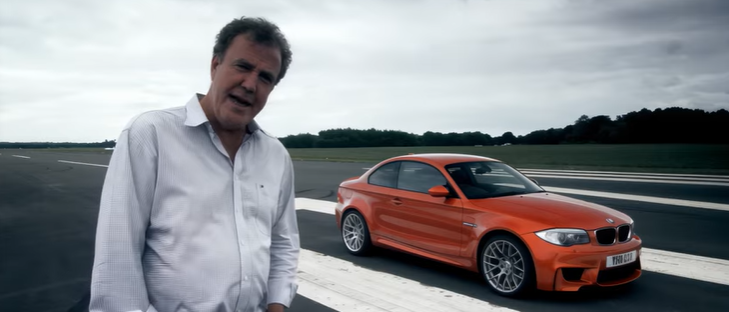
Yet few people are better qualified to make that statement than Jeremy Clarkson.
For more than three decades, the British motoring journalist has driven virtually every performance car, luxury saloon and supercar worth talking about. As the long-time presenter of Top Gear, and later The Grand Tour, Clarkson became famous for his humour, blunt opinions and genuine passion for driving.
Among his many controversial views is one that continues to resonate with enthusiasts around the world.
He believes that the golden age of the motor car was roughly between 1995 and 2010.
After spending time behind the wheel of some of BMW's greatest creations, it's hard not to wonder if he has a point.
When Driving Still Came First
Before giant touchscreens, endless software updates and dozens of electronic driving aids, cars were designed with one primary objective:
To be driven.
During those years manufacturers concentrated on balance rather than technology.
Cars communicated.
Steering had feel.
Engines had personality.
Drivers were involved in every journey.
You didn't simply travel from A to B.
You became part of the machine.
BMW's Golden Era
Few manufacturers benefited from this philosophy more than BMW.
Throughout the late 1990s and 2000s, BMW produced a remarkable collection of cars that many enthusiasts still regard as the finest the company has ever built.
Here are four that deserve legendary status.
BMW E39 530i (1996–2003)
Elegant.
Comfortable.
Timeless.
The E39 has frequently been described by automotive journalists as one of the greatest executive saloons ever built.
Its naturally aspirated straight-six engine delivered effortless power, while the chassis combined refinement with exceptional handling.
Even today, a well-maintained E39 feels remarkably modern.
BMW E46 330i (2000–2006)
Ask ten BMW enthusiasts to name the best 3 Series ever made and chances are several will choose the E46.
Perfect steering.
Perfect proportions.
A wonderfully smooth inline-six engine.
It wasn't built to impress with technology.
It was built to make every journey enjoyable.
Twenty years later, it still succeeds.
BMW E90 330i (2005–2011)
The E90 represented the evolution of everything BMW had learned.
Powered by the magnificent naturally aspirated N52 engine, it delivered outstanding performance without relying on turbochargers or complicated fuel systems.
Many enthusiasts consider it to be one of the last truly analogue BMWs.
Modern enough for everyday use.
Traditional enough to remind you why people fell in love with the brand in the first place.
BMW E60 530i (2007–2010)
If there is one car that perfectly illustrates Clarkson's argument, it might just be the E60 530i.
Beneath its sculptured bonnet lies BMW's legendary N52B30 straight-six producing 272 horsepower.
Silky smooth.
Effortlessly powerful.
Beautifully responsive.
Inside, the cabin reminds us of a different philosophy.
Physical buttons.
Simple controls.
The traditional iDrive controller.
No giant screens demanding your attention every few seconds.
Everything exists for one purpose:
Helping the driver enjoy the road.
Then Everything Changed
Around 2010 the automotive industry entered a new era.
Stricter emissions regulations.
Tougher safety standards.
Connectivity.
Digital dashboards.
Massive touchscreens.
Software updates.
Cars undoubtedly became safer.
Cleaner.
Faster.
More efficient.
But many enthusiasts believe they also became less involving.
Today's BMWs are extraordinary machines.
Yet some drivers miss the character that defined earlier generations.
Are These Cars Still Worth Buying?
Without question.
Provided they have been properly maintained.
Models powered by engines such as the M54 and especially the N52 continue to enjoy an excellent reputation among BMW specialists.
They remain reliable, rewarding and surprisingly practical.
Perhaps more importantly, they continue to deliver something increasingly difficult to find.
Emotion.
Was Jeremy Clarkson Right?
Perhaps.
Perhaps not.
After all, every generation believes the cars of its youth were somehow better.
But spend an afternoon behind the wheel of an E39, E46, E90 or E60 and you'll quickly understand why so many enthusiasts continue searching for them.
Modern cars may be quicker.
They may be smarter.
They may even be safer.
But sometimes the greatest pleasure isn't measured by technology.
It's measured by the smile that appears the moment you turn the key and hear a naturally aspirated BMW straight-six come to life.
And perhaps that's exactly what Jeremy Clarkson was talking about.
Final Thoughts
At PeçasBMW.com, we believe great BMWs deserve to remain on the road for decades to come.
With the right maintenance, quality OEM components and genuine enthusiasm, these remarkable cars will continue delivering the driving experience that made BMW famous.
Because legends are not built by software.
They are built by engineers.
Take care!
Prof. Carl Boniface


Comentários