Man of Evil

There were several bullies throughout history that have-to-have things their way. As my ex-boss used to say, it’s my way or the highway, meaning you either do what I want, or go away: get on the road and leave. In Brazil we say, “jogo de cintura,” meaning you need to be flexible. The words are to play with a belt which as you know can be shortened or widened. In other words, flexibility is the key to negotiation and resolving matters.
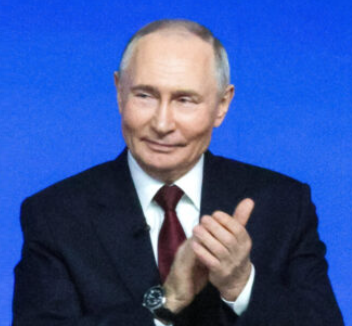
However, reclaiming Russia’s ‘historical lands’ appears to be how far do Putin’s imperial ambitions extend? Article:
As US officials talk up the prospects of a compromise peace with the Kremlin, Russian President Vladimir Putin has once again signaled that his expansionist appetite is far from sated. In a bellicose address delivered to Russian Defense Ministry officials in Moscow on December 17, Putin declared that the maximalist goals of his Ukraine invasion will be met “unconditionally” and framed the war as a crusade to reverse Russia’s post-Soviet retreat. “If the opposing side and their foreign patrons refuse to engage in substantive discussions, Russia will achieve the liberation of its historical lands by military means,” he declared.
None of this is entirely new, of course. Putin has long been notorious for delivering rambling history lectures to justify Russia’s war against Ukraine, and has directly compared the current invasion to Russian Czar Peter the Great’s eighteenth-century wars of imperial conquest. Nevertheless, at a time when European leaders are already looking to the eastern horizon with trepidation, it makes sense to explore what Putin means by “historically Russian lands” and examine just how far his imperial ambitions may actually stretch.
The most straightforward interpretation of Putin’s latest comments would suggest that he was referring to the portion of eastern Ukraine’s Donbas region that remains under Ukrainian control. After all, this small but heavily fortified and strategically important territory is currently at the heart of negotiations and has been named by Moscow as its price for a ceasefire. However, Kremlin officials are well known for sending contradictory signals regarding their territorial objectives in Ukraine, with Putin himself speaking this month about the “inevitable liberation of the Donbas and Novorossiya.”
Putin’s reference to “Novorossiya” (“New Russia”) raised eyebrows and was widely seen as a signal that Russia may be preparing to increase its territorial demands. The Czarist era term “Novorossiya” was first employed in the eighteenth and nineteenth centuries by imperial administrators to describe large swathes of southern and eastern Ukraine then under Russian rule. It fell into disuse during the Soviet period, only to be resurrected by the Kremlin following the onset of Russia’s Ukraine invasion in 2014.
Russian nationalists have yet to agree on the exact boundaries of Novorossiya, but most envisage a territory stretching far beyond the partially occupied Ukrainian provinces of Zaporizhzhia and Kherson that are currently claimed by the Kremlin. Putin has indicated that his definition of Novorossiya encompasses approximately half of Ukraine, including the country’s entire Black Sea coastline and major cities such as Odesa and Kharkiv.
Then there is the question of Kyiv. According to Russia’s own national mythology, the capital of Ukraine is also the mother of Russian cities and the spiritual birthplace of Russian Orthodoxy. Putin has repeatedly referenced the sacred status of Kyiv in his many essays and speeches denying the legitimacy of Ukrainian statehood. It is therefore extremely difficult to imagine him accepting any peace proposal that secures Kyiv’s postwar position as the capital of an independent Ukraine. Putin can hardly claim to be reuniting Russia’s historic lands if he leaves the most Russian city of them all firmly in the hands of a hostile state.
The article shows someone like Putin is evil, in as much as not wanting to bend. The Russian war against Ukraine started in February 2014 when Russia took over Crimea, and although it was halted for several years, flared up again over sovereinty issues on 24 February 2022.
Tyrants will be tyrants!
Take care!
Prof. Carl Boniface
Source: Atlantic Council
Vocabulary builder:
In as much as (idiom) = in view of the fact that; in view of the fact that; seeing that; since. insofar as; to such a degree as. Much as = even though


Comentários